TL;DR
- Medellín works best for remote workers earning at least $2,500/month USD — below that, you're competing with local wages on rent and services.
- The Digital Nomad Visa (DNV) is the default path for stays over 6 months and requires ~$1,400/month proven income in 2026.
- Plan on $1,600–$2,800/month all-in for a solo nomad living comfortably in Poblado, Laureles, or Envigado.
- Land in a furnished short-term rental for 2–4 weeks. Sign a long-term lease only after you've lived in your target neighborhood.
- Skip the paperwork rabbit hole: a Fixer handles visa, apartment hunt, and setup in one flow.
01Should you actually move?
Medellín is not the automatic win the internet says it is. It is a very good fit for a specific kind of person and a bad fit for others, and the difference is almost entirely about honesty with yourself before you buy the plane ticket. This section is deliberately shaped as disqualifiers rather than a pitch — everything else on this site helps if you clear the bar.
The city works well if you have stable remote income, ideally at least $2,500 USD per month for a solo nomad, more for a couple or family. It works well if you enjoy a place that is alive — Medellín is loud, expressive, and social in a way that surprises people expecting a mountain retreat. It works well if you are willing to learn some Spanish; you can survive on English in Poblado, but you cannot live well long-term without at least intermediate conversation.
It works poorly if you need a five-star hospital every time you get a headache (the private clinics are excellent, but the surrounding infrastructure is developing-world). It works poorly if you require Amazon-next-day-delivery levels of consumer convenience. It works poorly if you cannot handle a place where rules are frequently negotiated rather than enforced — leases, timelines, contractor estimates, all of it exists on a sliding scale of "when we get to it."
If your goal is "cheaper San Francisco with better weather," you will be disappointed. If your goal is "vivid daily life at a fraction of North American costs, with real trade-offs," Medellín delivers.
02The 5 stages of a Medellín move
Every successful move we've observed follows the same rough arc. Naming the stages upfront saves you from mistaking a normal middle stage for a wrong turn.
| Stage | Rough duration | What you're doing |
|---|---|---|
| Pre-arrival | 1–3 months before | Visa decision, budget model, initial neighborhood short-list, book first 2–4 weeks of housing. |
| First week | Days 1–7 | SIM card, bank access (usually via Wise/Revolut initially), grocery run, first coworking day pass. |
| Settling | Weeks 2–8 | Trial neighborhoods, lock in a coworking membership, start Spanish classes, apartment hunt begins. |
| Thriving | Months 3–9 | Signed lease, real friend group, weekend trips, DNV or extension paperwork if applicable. |
| Long-term | Year 1+ | Residency track decisions, cédula, deeper local integration, or a clean exit if it isn't working. |
The site is organized around these five stages — the Nomad OS operating system. Each stage has its own tools and playbook. This guide is your pre-arrival compass.
03Visa reality check
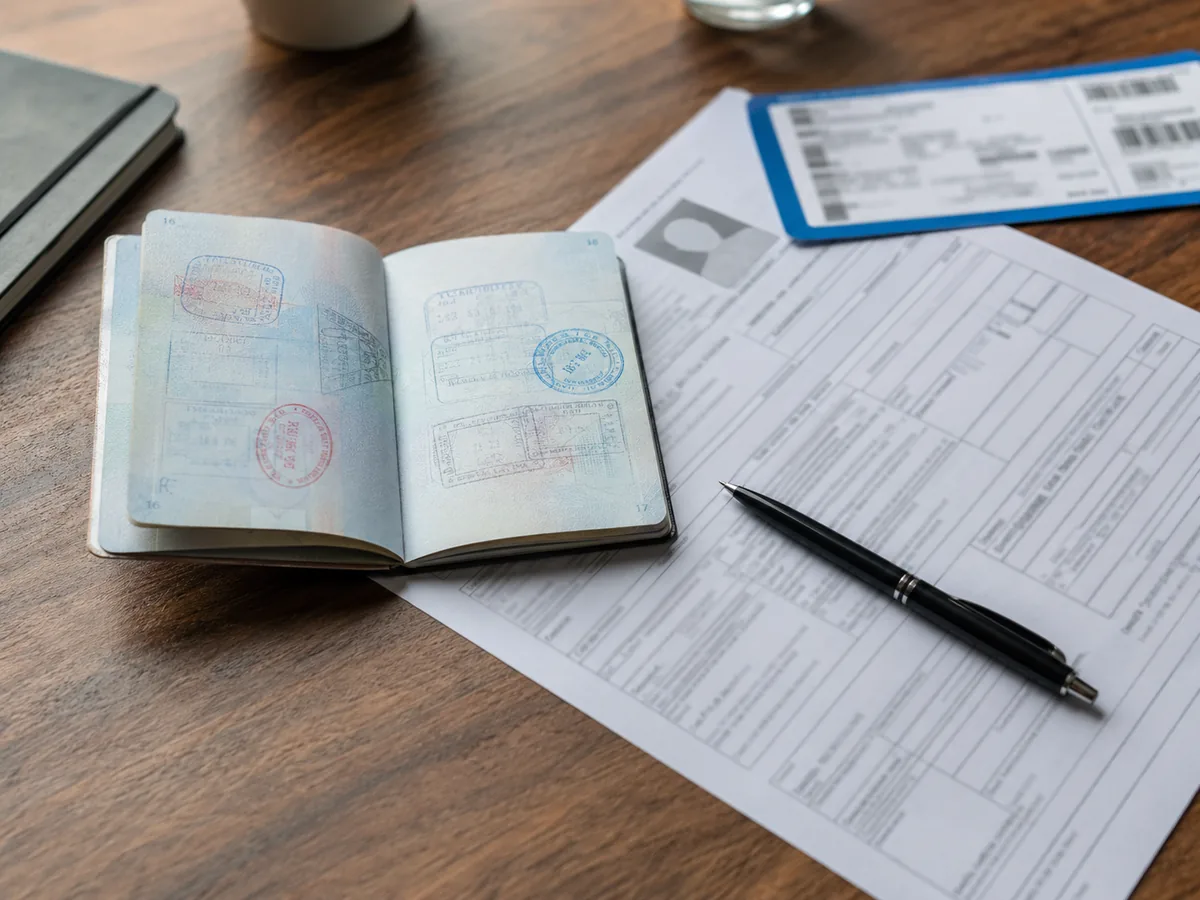
Most people arriving from a visa-exempt country — the US, Canada, UK, EU, Australia, and about 90 others — get an automatic 90 days on entry. That can be extended once for another 90 days at Migración Colombia, giving you a legal 6-month window with no visa application. This is the default path for shorter stays or a trial run.
Past that, you need a real visa. In 2026 the practical options are:
- V-Nómadas Digitales Nómada Digital (DNV): Colombia's Digital Nomad Visa. Up to 2 years, requires ~$1,400 USD/month proven remote income, must be from a visa-exempt country.
- M-Migrante Rentista: Passive income visa. Requires 10× the monthly minimum wage — roughly $4,700 USD/month in 2026 — but grants a 3-year visa and counts toward residency.
- M-Migrante Pensionado: Retirement visa. Requires 3× the minimum wage in pension income (~$1,400 USD/month) and grants 3 years.
- M-Migrante Inversionista: Investor visa via real estate. Requires roughly $115,000 USD in property or ~$210,000 in a business.
- M-Migrante Trabajador: Work visa via a Colombian employer or long-term contractor arrangement.
The 2026 Colombian minimum wage (SMMLV) is COP 1,750,905/month. The DNV threshold of "3× SMMLV" therefore lands at COP 5,252,715/month (~$1,400 USD at current rates). You must prove this consistently across the last 3 months, not average it up with a windfall. See the full DNV guide for the exact document list and rejection triggers.
04Cost of living, honestly
The internet loves to claim you can live in Medellín on $1,000 a month. You can — the way you can live in Brooklyn on $1,500. It requires a specific kind of life most nomads reading this article are not going to want. Here are the honest 2026 numbers for someone living well in a nomad-friendly neighborhood.
| Category | Solo nomad | Couple |
|---|---|---|
| Furnished 1BR rent (Poblado / Laureles / Envigado) | $700–$1,200 | $900–$1,600 |
| Utilities + internet | $60–$120 | $90–$160 |
| Coworking (monthly hot desk) | $100–$220 | $180–$340 |
| Groceries | $180–$300 | $320–$500 |
| Dining out (~15 meals/mo) | $120–$280 | $220–$500 |
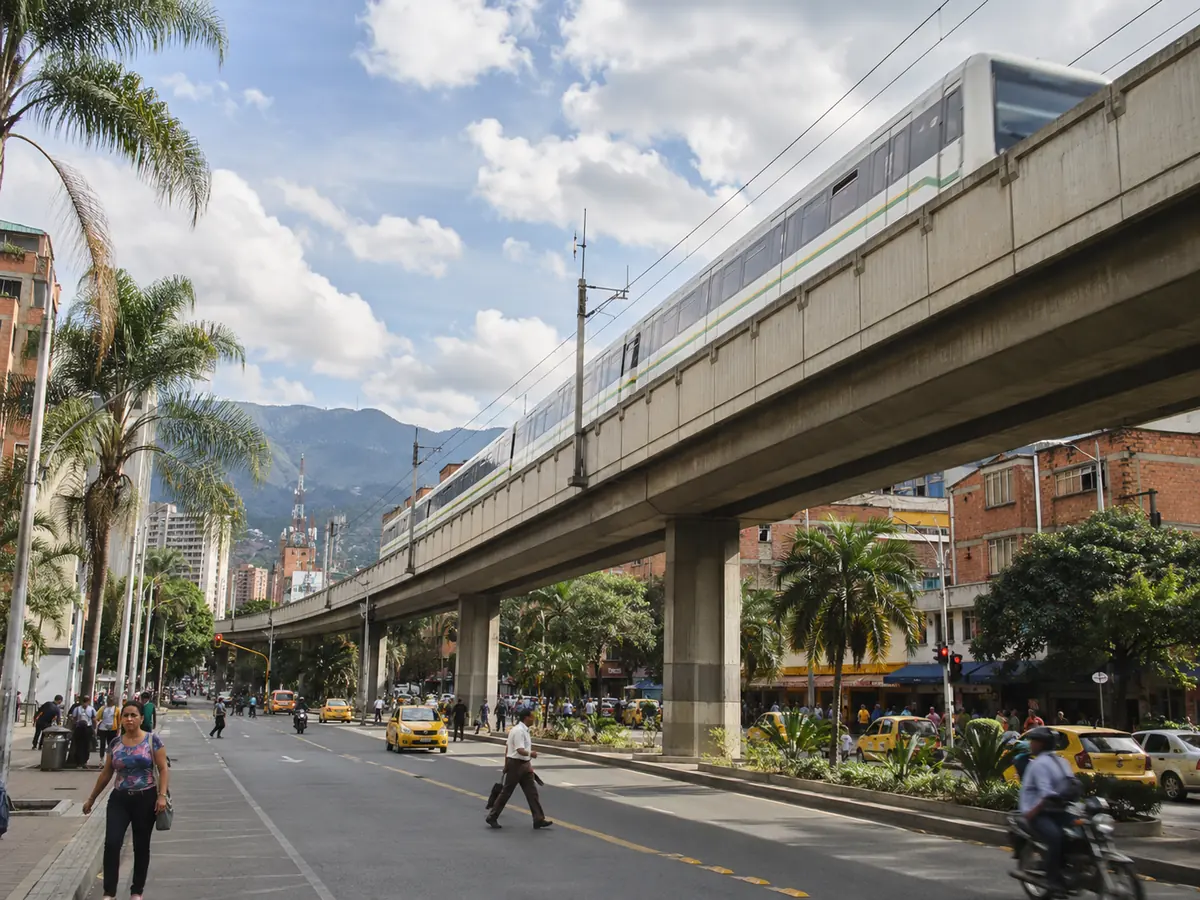
| Local transport (Uber/DiDi/Metro) | $60–$140 | $100–$220 |
| Health insurance (private) | $60–$140 | $120–$260 |
| Gym + Spanish class | $70–$150 | $120–$260 |
| Fun money (bars, weekend trips, misc) | $250–$450 | $400–$800 |
| Realistic monthly total | $1,600–$2,800 | $2,650–$4,300 |
Two things worth noting. First, the ceiling numbers assume Poblado — the most expat-priced neighborhood. Move to Laureles or Belén and the bottom of every range becomes realistic. Second, the "fun money" line is where most nomads underestimate; long weekends to Guatapé, Jardín, or the Caribbean coast add up faster than you think.
05Where to live
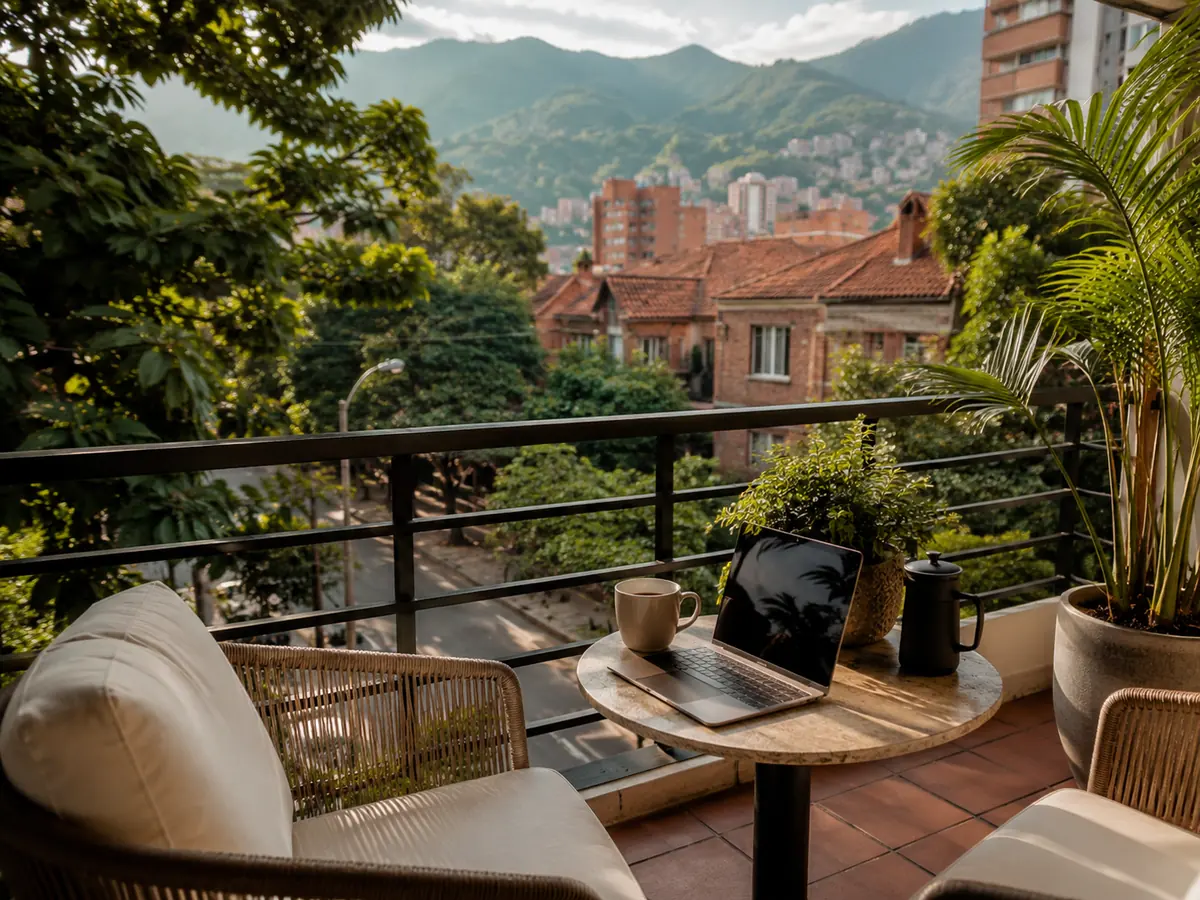
Six neighborhoods make up 95% of the nomad map. Each has a specific personality. The Neighborhood Explorer tool compares them on 9 criteria (walkability, nightlife, price, safety, English-friendliness, etc.), but here's the one-line version:
- El Poblado — the default landing zone. English-friendly, most restaurants, most social scenes, highest prices. Great for month 1, sometimes exhausting long-term.
- Laureles — the nomad's second act. Grid layout, walkable, more Colombian character, roughly 30% cheaper than Poblado. Many people move here after their first month.
- Envigado — a separate municipality just south of Poblado. Quieter, more family-oriented, excellent food scene around Parque Envigado. Popular with couples and longer stayers.
- Sabaneta — even further south, more suburban, dramatically cheaper. For nomads who want quiet and don't need to be in the nightlife scene.
- Belén — west side of the city. Genuinely local, best value for the money, less English. Best for intermediate-Spanish nomads on longer stays.
- Manila — micro-neighborhood inside El Poblado. Trendy, walkable, café-heavy. High price per square meter but a cult favorite.
The single best "which neighborhood?" test is to spend 3–5 nights in each of your top two candidates before signing anything longer than a month. Rental listings can't convey noise, morning light, or how the streets feel at 10pm. Real people can. See the first 30 days guide for how to structure the neighborhood-test period.
06The move-week checklist
The first week has a specific shape. Do these things in roughly this order and you avoid 80% of newcomer friction.
Before you fly
- Book your first 2–4 weeks of housing (furnished, no long lease commitment).
- Open a Wise or Revolut account. You will use it to pay rent, restaurants, and everything else at real exchange rates instead of losing 3% to your home bank.
- Photograph your passport, entry stamp, and vaccination records to your phone.
- Download apps: Uber, DiDi, Rappi (delivery), Google Translate offline Spanish pack, WhatsApp (Colombia runs on it).
Days 1–3
- Get a Colombian SIM at the airport or a nearby Claro/Movistar shop. Ask for a plan with 10+ GB — you will use it.
- Grocery run at Éxito or Carulla. Buy the basics you need for the week; do not stock up until you know where you're actually staying.
- Walk your neighborhood. Find the closest laundry, gym, coworking, and grocery store on foot.
Days 4–7
- Buy a day pass at one coworking space. Buy a second one at a different space the next day. You'll know which one fits within 20 minutes.
- Sign up for a Spanish class if you're staying more than a month. Small group classes at institutions like Toucan or Colombia Immersion run about $100–$180/week.
- If you're planning to stay long-term, this is when to start the real apartment hunt — leases take 2–4 weeks to close.
07The 7 most common mistakes
Patterns we see over and over from people who wish they'd known earlier:
- Signing a 6-month lease in your first two weeks. You do not know the neighborhood yet. You do not know the noise. You will regret it.
- Landing in Poblado and staying in Poblado. The Poblado bubble is real. Many nomads never see the rest of the city, and their experience of "Medellín" is basically Zona Rosa. Explore.
- Believing the $1,000/month narrative. You can hit that. You will not enjoy it. Budget honestly and enjoy the trip.
- Skipping Spanish. The Medellín you can access with even 3 months of classes is dramatically larger than the English-only version. Start immediately.
- Trusting Google Maps for restaurants. Ratings skew heavily toward gringo-friendly places. Ask locals or read Colombian food blogs.
- Ignoring the visa clock. The 90-day tourist entry feels generous until it isn't. Know your exit date from day one and plan the extension or visa accordingly.
- Doing everything alone. If any of the above sounds exhausting — the visa research, the apartment hunt, the setup — that's what the Fixer exists for. It's not luxury; for someone with a real job to keep up, it's usually cheaper than the time you'd otherwise burn.
08Your next steps
If you've read this far, you're seriously considering the move. The Nomad OS is designed to route you to the specific tool for wherever you are in the decision:
- Not sure which visa you qualify for? Run the Visa Wizard — it takes 60 seconds and gives you an answer, not a wall of text.
- Weighing neighborhoods? Use the Neighborhood Explorer to compare 2–3 candidates on the criteria that matter to you.
- Building your budget? The Cost Calculator lets you dial in a real monthly number for your specific lifestyle.
- Want a human to handle the whole thing? A Fixer takes the visa, the apartment, and the first-week setup off your plate.
Whatever you pick, remember: the goal isn't to move perfectly. It's to move well enough that you actually get to spend your first month living in Medellín instead of fighting it.